
What You Need To Consider Before Finishing Your Basement
For those of you wondering whether remodeling your basement is worth the time and expense, the short answer is yes. According to The Balance Small Business, homeowners can expect a return of between 70% and 75% on their investment. If you are planning on selling your home in the not-too-distant future, you will want to prioritize projects that will give you the most bang for your buck. A finished basement is certainly a draw for prospective buyers.
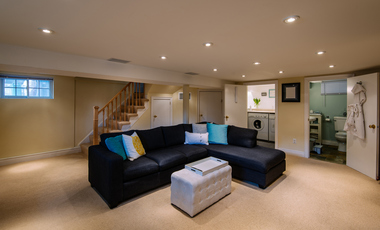 How you will finance the project is a major consideration. Rather than take out money from your savings account or place the expenses on a high-interest credit card, there are two other loan options that might work for you. The first is a cash-out refinance, which allows the homeowner to leverage their home’s equity to generate tax-free money for the project. You can usually have access to up to 80% of your home’s value. The second option is a home equity line of credit, which allows you to turn the value of your home into a revolving line of credit for a draw period of between five and 10 years.
While plumbing and electricity are best left to the professionals, you may want to flex your do-it-yourself muscles by framing walls, installing insulation and hanging drywall. This is certainly a budget-friendly option that frees up some funds for other parts of the project.
Testing for radon, an odorless radioactive gas, is essential before refinishing any basement. Left unchecked, radon can expose you and your family to the equivalent of 200 chest X-rays each year. You can hire a professional to do the testing or do it yourself with charcoal-based collectors. Mitigating radon may mean sealing cracks and surfaces and installing ventilation.
Consider the rules
Local building codes may require egress windows if the basement is to be used as a bedroom. This means the windows must be large enough for a firefighter in full gear to climb through the window in case of a fire and the stairway is blocked.
Plan on installing safe access to and from your basement with a stairway that includes safety handrails. Add supporting walls to the handrails to keep them secured to the wall.
Any moisture issues will also need to be addressed. Make sure there is good drainage off the basement and away from the foundation. If creating a guest suite or an apartment is the intention, check that good ventilation is provided for a bathroom and a kitchen, and keep windows closed during humid months. Breathable insulation and vapor retardant are also key to eliminating moisture concerns.
Not all flooring is suitable for a basement, especially that made of natural wood. Flooring options include vinyl planks, ceramic tiles and engineered wood. Carpet tiles, usually found in commercial installations, are another option. They are durable, easy to install and even simple to replace if necessary.
A drop ceiling works best for a basement remodel, as it allows access to plumbing pipes and electrical hookups. A dry-wall ceiling is another possibility; however, textured ceilings have a tendency to flake off.
Have a heating, ventilation and air-conditioning professional access your home’s heating and air-conditioning capabilities to ensure your current system can handle the additional basement load. You don’t want to put a strain on the system and diminish the lifespan of the equipment.
Whatever your visions for your basement, make sure to cover your bases. Contact us for more matters to consider before starting this or any home remodel.

| Vince DiFilippo |
| REALTOR® |
| Mobile: +1 908-400-5599 | Office: (908) 233-8502 |
| [email protected] |
| Keller Williams Realty |
| 1 Elm Street |
| Westfield, NJ 07090 |