
World Cup Spotlight Brings Big Questions for New Jersey
With MetLife Stadium set to host eight matches, including the final, state officials face questions over transportation, security, taxes and who should pay for it all.
By William Swanson
Phil Murphy is a big soccer fan.
He has served on the boards of various soccer foundations and, with his wife Tammy, owns a share of Gotham FC, a New Jersey professional women’s soccer club.
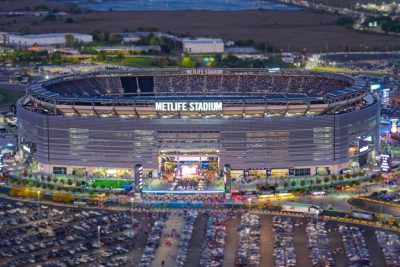
As governor, Murphy’s passion for soccer helped bring the state a major prize: eight 2026 World Cup matches, including the final, will be played at MetLife Stadium in East Rutherford.
Murphy, of course, will not be governor when the matches begin in June. So it has been left to the Sherrill administration to oversee traffic, security and everything else connected to a world-class event.
It is fair to say things have been a little rough.
After legislative hearings in late April, an obvious conclusion could be drawn: soccer, or football as the rest of the world calls it, may be the most popular sport on the planet, but it is still not the most popular sport in the United States.
That led to an amusing moment at a hearing in Trenton when state Sen. Declan O’Scanlon, R-Monmouth, said he did not understand the World Cup hype because, in his view, “soccer sucks.”
Beyond the senator’s personal feelings, there are tangible concerns about the games being played in New Jersey.
Gov. Mikie Sherrill has said she does not want average New Jerseyans underwriting the cost of hosting the tournament. Her solution essentially amounts to making visitors pay more of the bill.
Parking at MetLife Stadium will be prohibited for spectators for security and logistics reasons. That may seem odd, especially since parking was available at MetLife when the Super Bowl was played there in 2014.
This time, the answer is mass transit. But that answer has brought its own controversy.
Round-trip train tickets are expected to cost as much as $150. On game days, access to certain World Cup trains will be limited to those attending the matches.
The governor also has proposed increasing the state’s 6.625 percent sales tax by three percentage points, to 9.625 percent, on certain purchases in the roughly 30-square-mile Meadowlands district.
That idea was condemned by Democratic Rep. Josh Gottheimer, who asked the governor to reconsider. Gottheimer’s district sits just north of MetLife Stadium.
During the same hearing where O’Scanlon offered his opinion on soccer, Lt. Gov. Dale Caldwell argued that the World Cup could bring millions, if not billions, of dollars to New Jersey.
His view is that thousands of fans traveling to the state for the matches will stay in local hotels, eat in local restaurants and patronize local shops.
O’Scanlon was not convinced. He dismissed projections of up to a billion dollars in business as “pie in the sky.”
Caldwell, a renowned tennis player in his youth, compared the World Cup to the economic boost the U.S. Open brings to New York City each September.
Speaking of New York, the matches will be played in New Jersey, but officially this is also a New York event.
If New Jersey boosters are accustomed to playing second fiddle to Manhattan, FIFA is not helping.
The official World Cup schedule lists the East Rutherford venue as “New York New Jersey Stadium.”
For New Jersey, the World Cup is both a global showcase and a local test.
The state won the prize. Now it has to manage the bill, the crowds and the politics that come with it.